
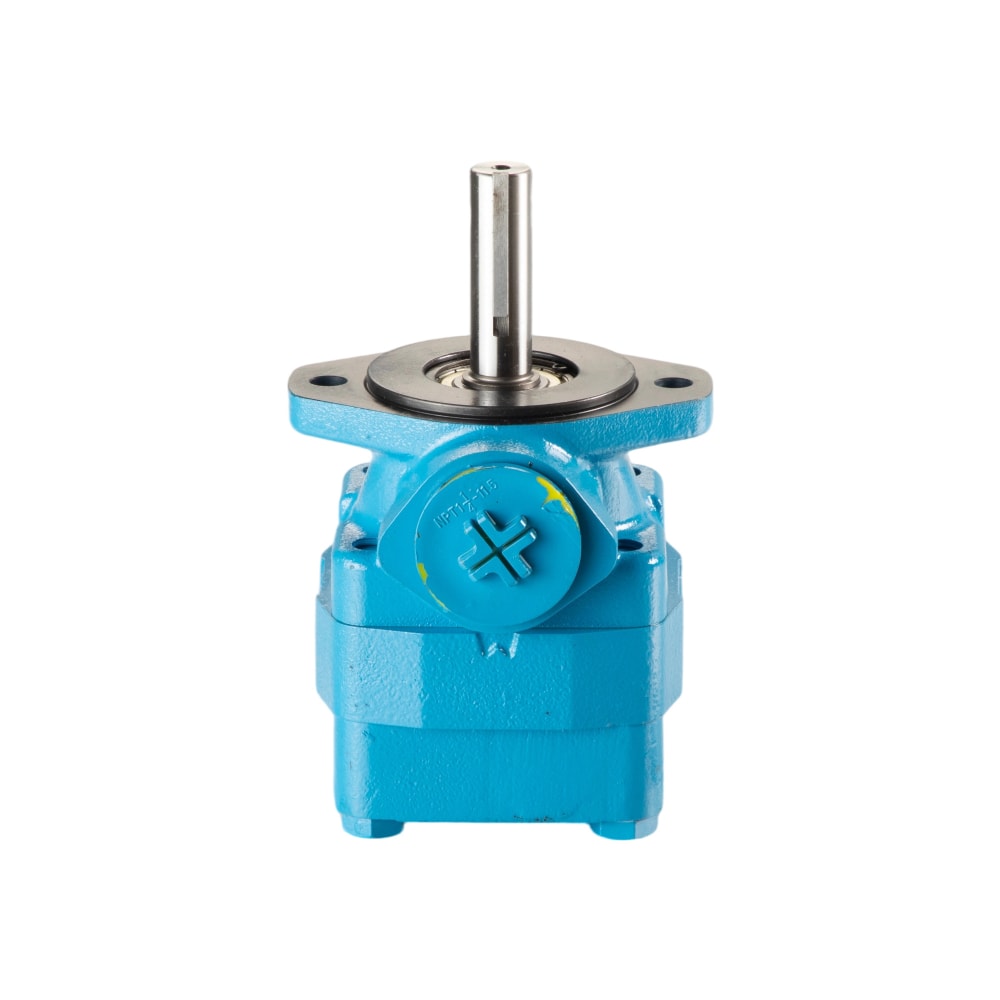
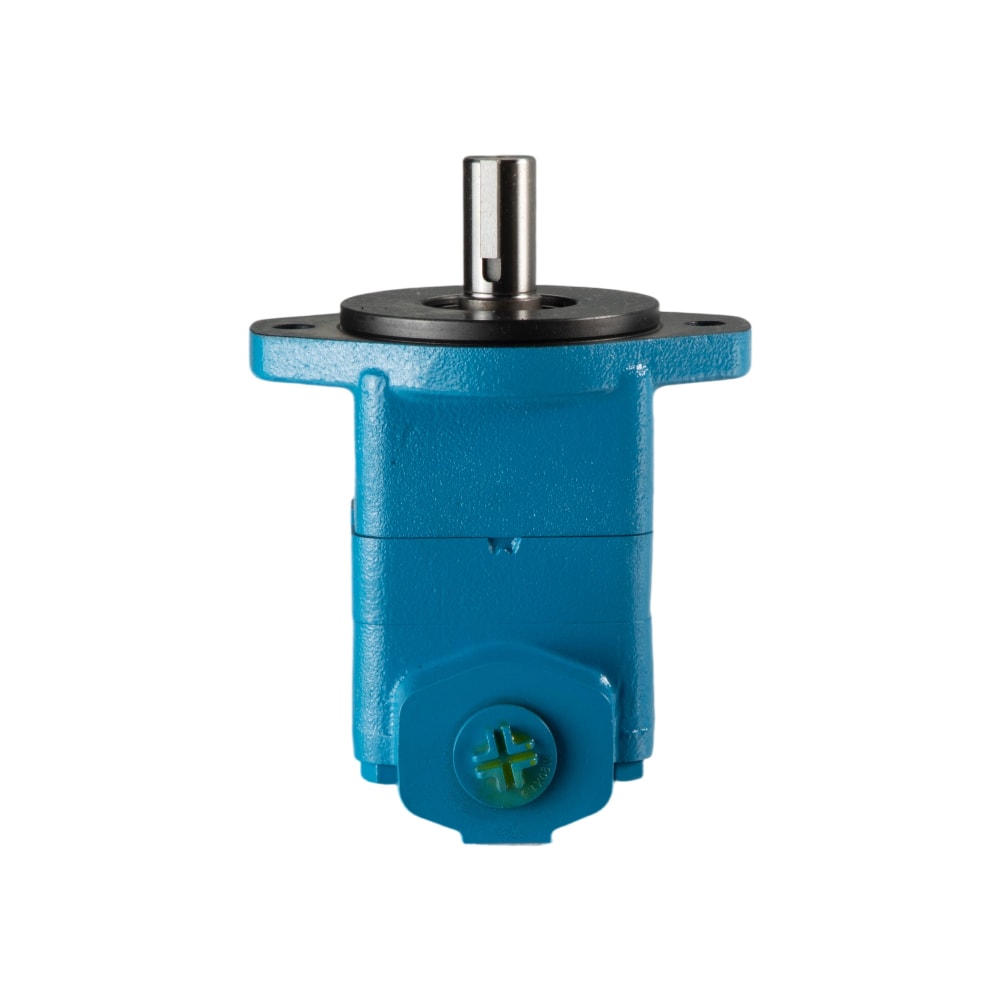
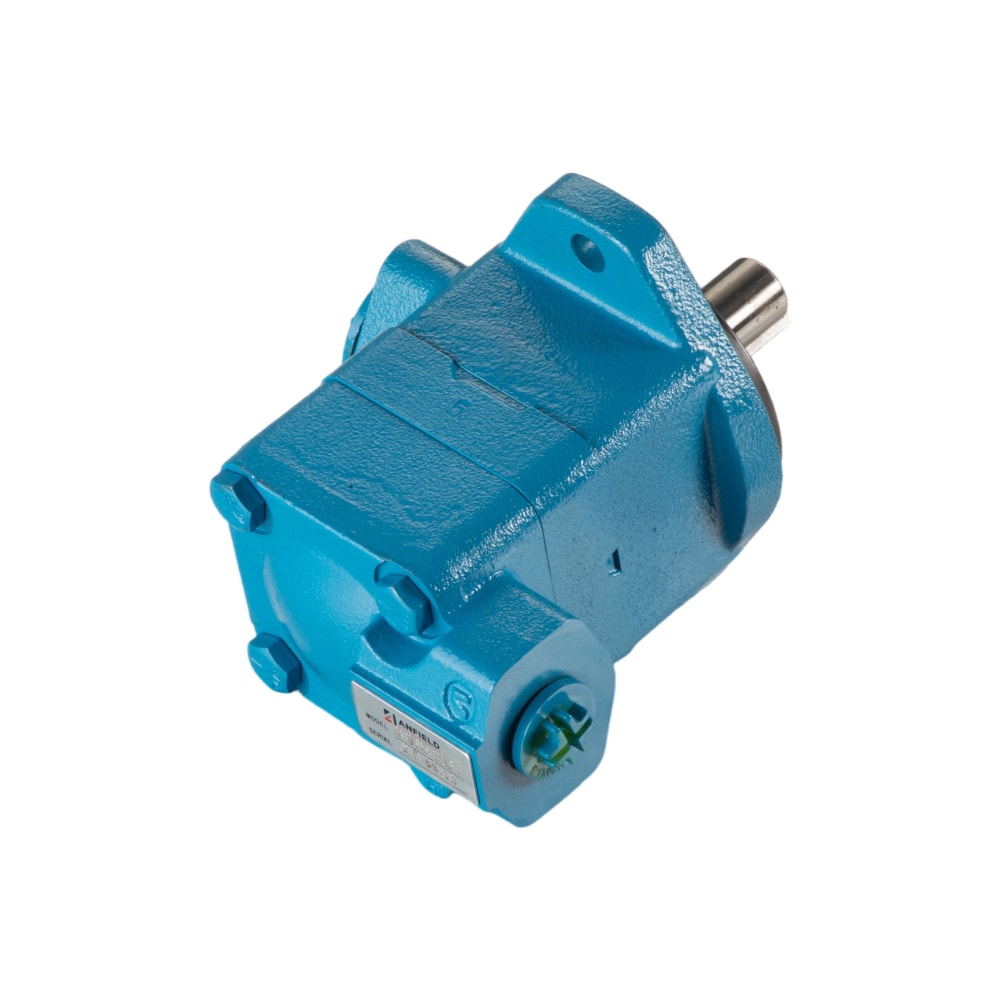
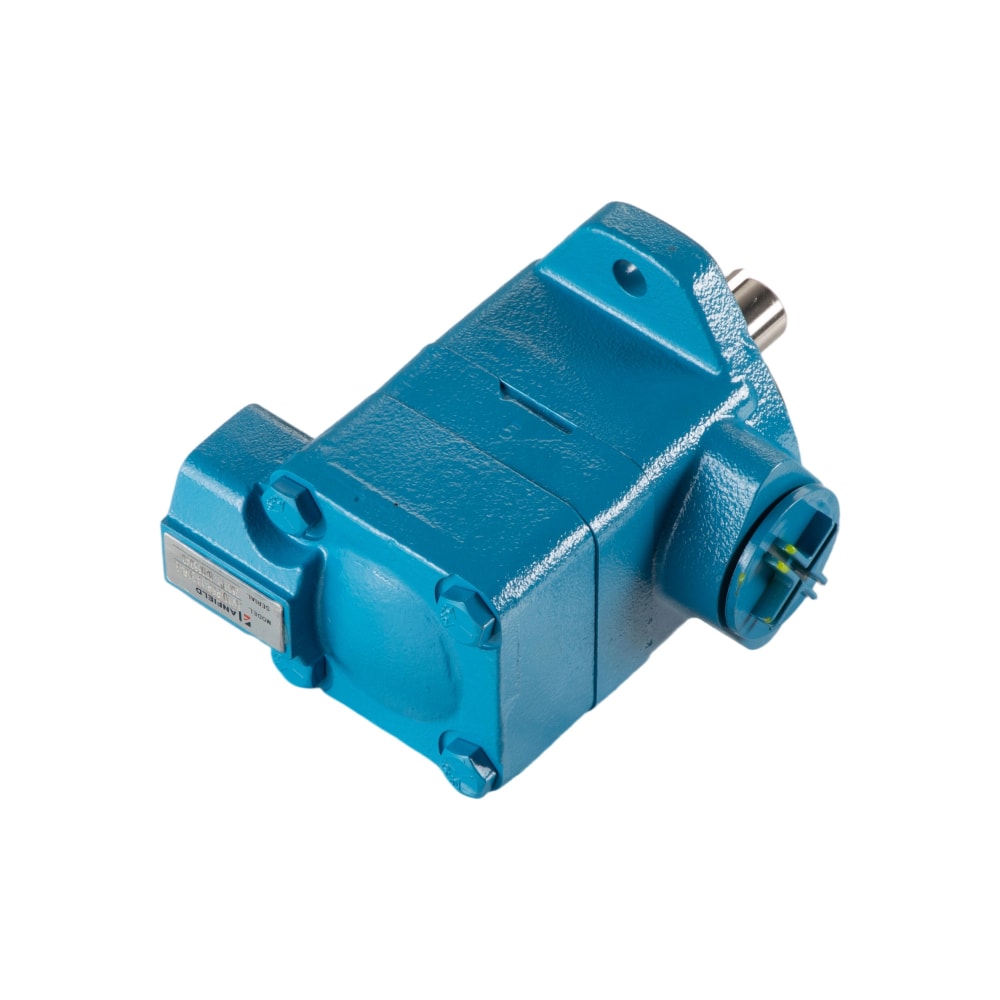
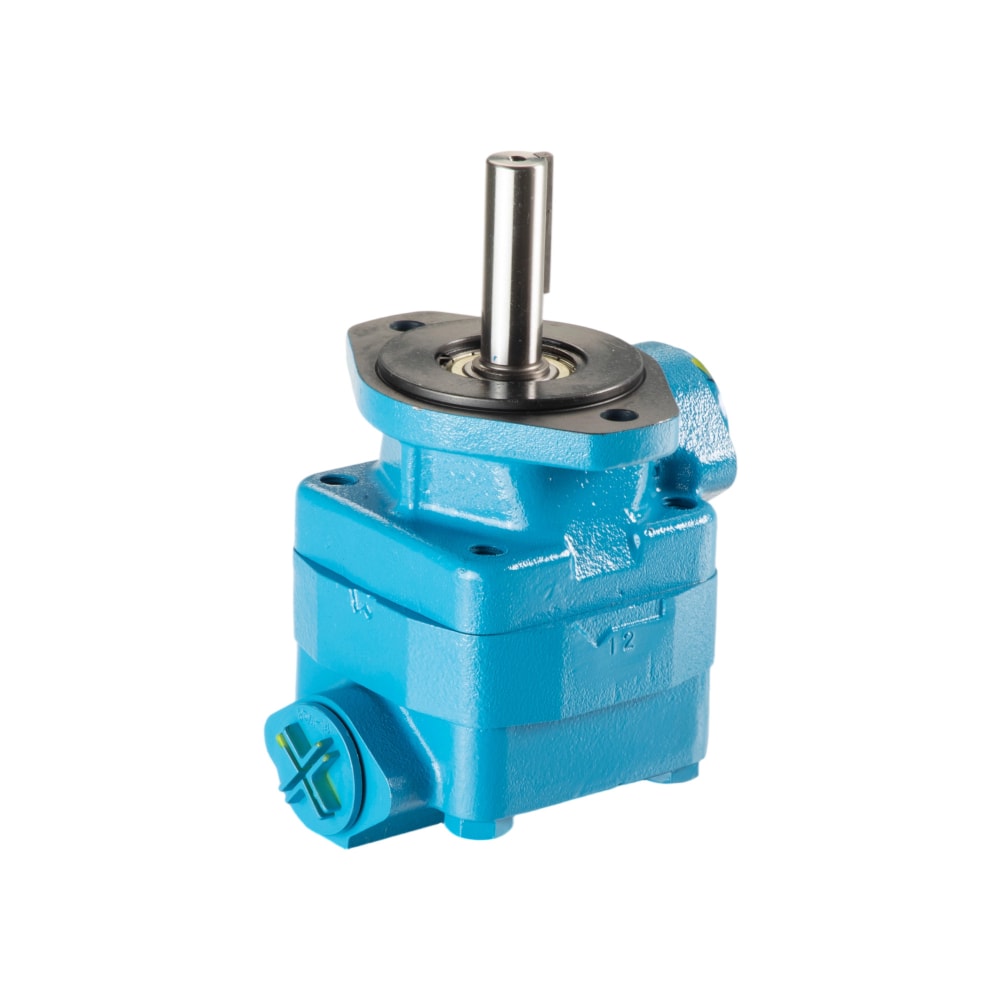
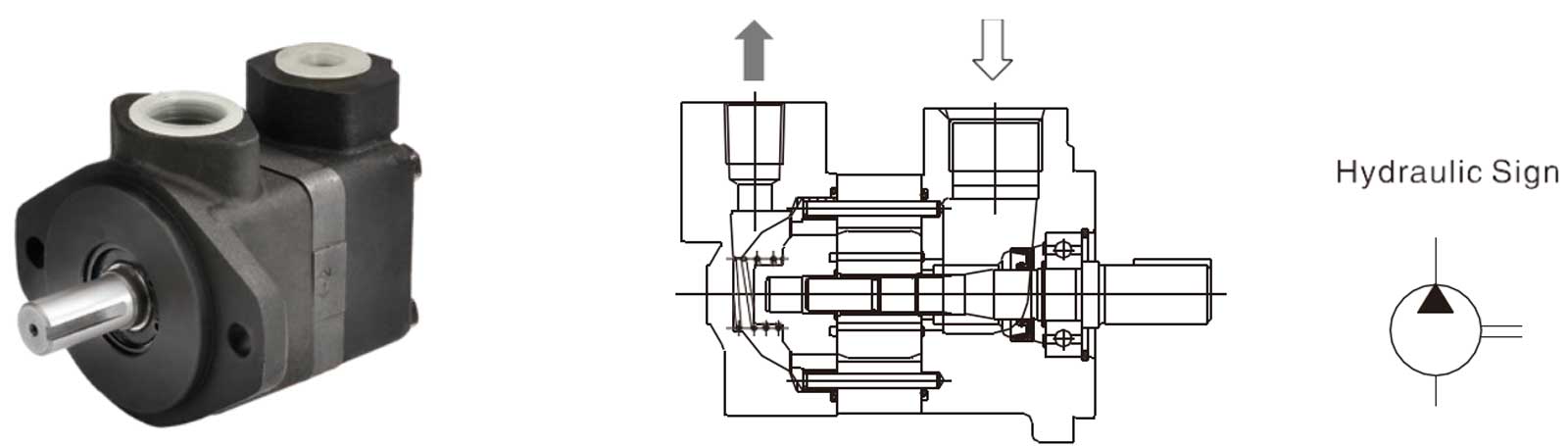
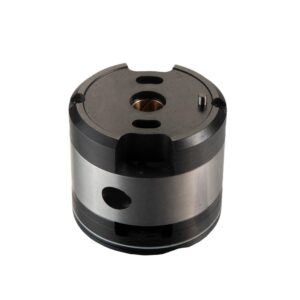
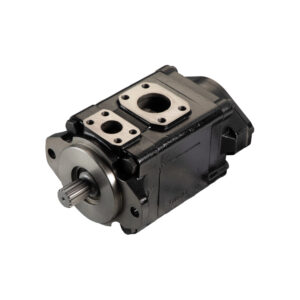
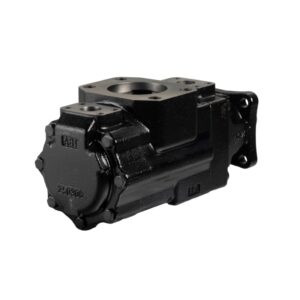
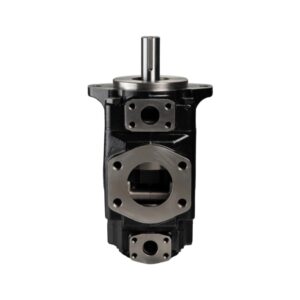
Description
Model Designation
| (F3-) | V10 |
-P |
7 |
S |
-1 |
C |
20 |
-L |
| Note | Series | Inlet connection | Displacement |
Outlet connection |
Shaft type | Outlet positions |
Design number |
Rotation |
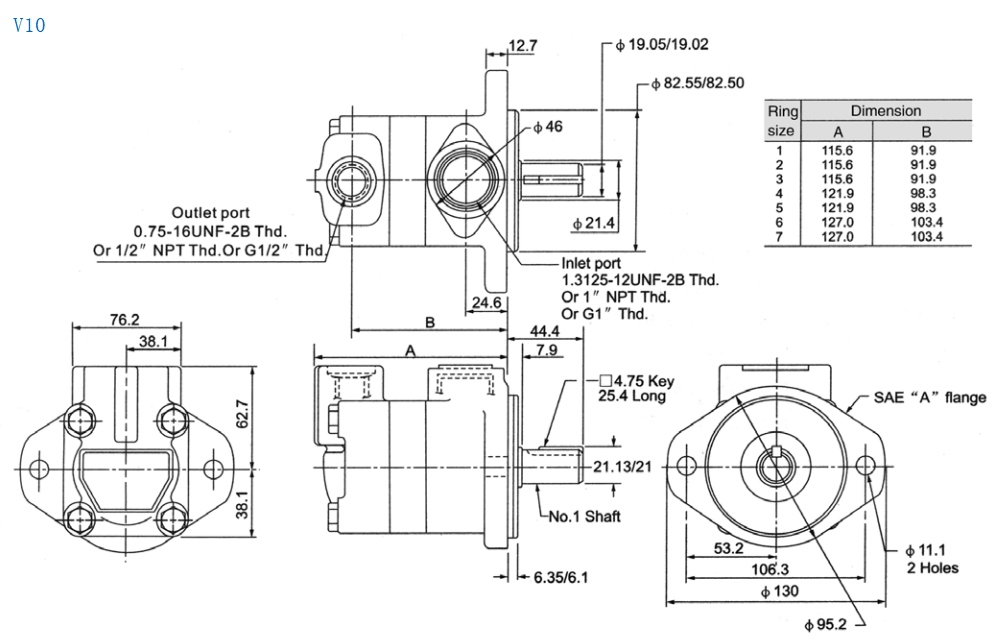
| Omit if not required F3-: Viton seals | V10 | P-1″NPT Thread S-1.3125-12 Straight B-G1″ Thread |
1, 2, 3, 4, 5, 6, 7 |
P-1/2″NPT Thread S-0.750-16 Str.Thread B-G1/2″ Thread | 1-Str key 11-Spline 38-11teeth-3/4″ outside spline shaft 62-spline shaft (only for V20) | (Viewed from cover end of pump) A-Opposite inlet B- 90o CCW from inlet C-Inline with inlet D-90o CW from inlet | 20 | (Viewed from shaft end of pump) R-right hand for clockwise L-left hand for counter- clockwise |
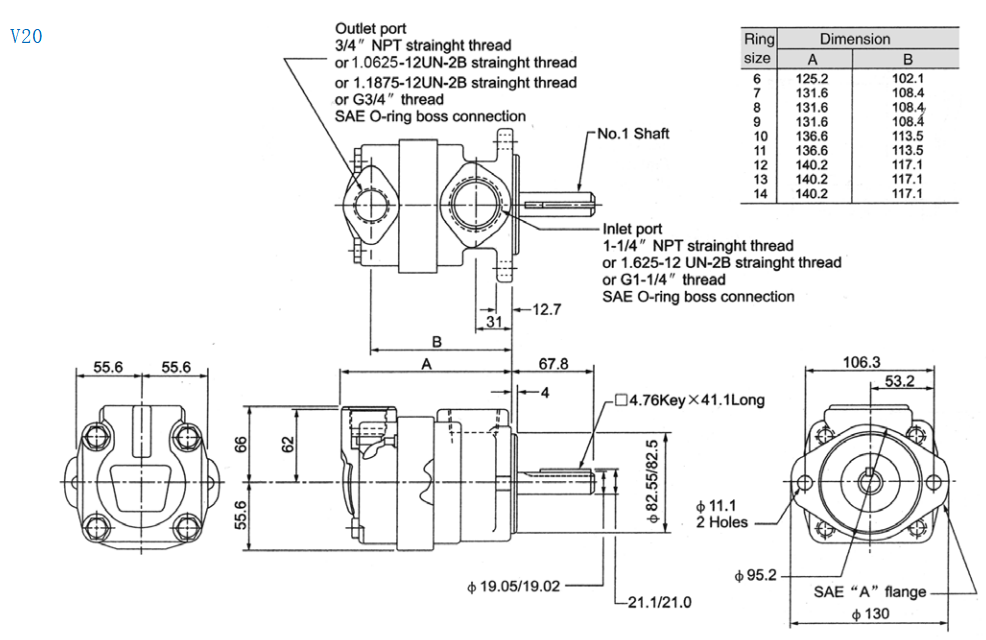
| V20 | P-1-1/4″NPT Thread S-1.625-12 Straight B-G1-1/4″ Thread | 6, 7, 8, 9, 10, 11, 12, 13 | P-3/4″NPT Thread S-1.0625-12 Straight R-1.1875-12 Straight B-G3/4″Thread | 10 |
Technical Data
|
series |
Displacement code |
Geometric displacement mL/r |
With antiwear hydraulic oil or phosphate ester fluid |
With water glycol fluid | With water-oil emulsions | |||
| Mpa Max.pressure | r/min Max.speed | Mpa Max.pressure | r/min Max.speed | Mpa Max.pressure | r/min Max.speed | |||
|
V10 |
1 |
3.3 |
17.2 |
4800 |
12.4 |
1800 |
10.3 |
1800 |
|
2 |
6.6 |
4500 |
||||||
|
3 |
9.8 |
4000 |
||||||
|
4 |
13.1 |
3400 |
||||||
|
5 |
16.4 |
3200 |
||||||
|
6 |
19.5 |
15.2 |
3000 |
10.9 |
||||
|
7 |
22.8 |
13.8 |
2800 |
|||||
|
V20 |
6 |
19.5 |
17.2 |
3400 |
12.4 |
1800 |
10.9 |
1800 |
|
7 |
22.8 |
3000 |
||||||
|
8 |
26.5 |
2800 |
||||||
|
9 |
29.7 |
|||||||
|
10 |
30.0 |
|||||||
|
11 |
36.4 |
2500 |
10.9 |
9.3 |
||||
|
12 |
39 |
15.2 |
2400 |
|||||
|
13 |
42.4 |
|||||||
FAQ
Q1: What is the main difference between the V10 and V20 series vane pumps? How do I choose the right one?
A1: This is a crucial question. The primary difference lies in their operating pressure and displacement ranges.
● The V10 Series is a medium-duty pump with a typical rated pressure of around 210 bar. It’s ideal for applications requiring high pressure but with a more optimized budget, such as medium-sized injection molding machines or machine tools.
● The V20 Series is a heavy-duty pump, with a rated pressure up to 280 bar or higher. It’s designed for more demanding, continuous high-load applications like large presses or construction machinery.
● Our Recommendation: If your system pressure is below 200 bar, the V10 series offers excellent value. If your equipment faces constant high-pressure demands, the V20 series will provide longer service life and superior reliability. Unsure which one you need? Contact our technical team with your equipment model and operating conditions, and we’ll recommend the best solution for you.
Q2: What is the expected service life of this vane pump, and what factors can affect it?
A2:Under correct operating conditions and proper maintenance, our V10/V20 series vane pumps are designed for a service life of several thousand hours. Key factors influencing longevity include:
● Hydraulic Oil Cleanliness: This is the most critical factor. Maintaining clean fluid (recommended NAS Class 8 or better) significantly extends the life of the pump and the entire system.
● Operating Pressure and Speed: Avoid continuous operation at the pump’s maximum pressure and speed limits.
● Oil Temperature: The ideal oil temperature range is 30°C – 60°C. Excessively high temperatures accelerate oil degradation and seal damage.
● Correct Installation and Maintenance: Ensure the inlet line is unobstructed and change filters regularly.
Our use of high-quality, wear-resistant materials and precision manufacturing ensures inherent durability.
Q3: What are the advantages and disadvantages of vane pumps compared to gear pumps?
A: That’s an excellent question for comparison. Vane pumps and gear pumps each have their strengths:
Key Advantages of Vane Pumps
● Quieter and Smoother Operation: Ideal for indoor equipment or precision machine tools where noise is a concern.
● Higher Volumetric Efficiency: Delivers more stable flow for their size, leading to better energy efficiency.
● Good Self-Priming Capability.
Key Advantages of Gear Pumps
● More Contamination Tolerant: Generally less sensitive to fluid cleanliness.
● Often Lower Initial Cost: Suitable for budget-conscious applications with harsh conditions.
● Conclusion: If your priorities are low noise, high efficiency, and stable performance, a vane pump is the superior choice. If the operating environment is very dirty and the budget is the primary constraint, a gear pump might be more suitable.
Reviews
There are no reviews yet.