


Selecting the right Planetary Reducer for injection molding is crucial for ensuring optimal machine performance, especially when considering a reliable injection molding machine gearbox supplier. Key factors such as speed, torque, and operational cycles significantly influence this selection. Technical specifications, including precision and load capacity, dictate the effectiveness of theplanetary reducer for IMM manufacturer, impacting overall efficiency in production. Additionally, incorporating a direct drive servo motor for injection can further enhance the performance of the system.
Key Takeaways
- Selecting the right Planetary Reducerenhances injection molding efficiency. Focus on speed, torque, and load cycles to optimize machine performance.
- Understanding load operation cycles is crucial. Analyze these cycles to improve equipment longevity and production efficiency.
- Choosing the correct reduction ratio is vital. It affects torque amplification, speed control, and energy efficiency in the injection molding process.
Understanding Load Operation Cycles
Load operation cycles play a critical role in the performance and longevity of Planetary Reducers used in injection molding. These cycles refer to the varying loads that the reducer experiences during its operation. Understanding these cycles helps manufacturersoptimize their equipment and improve production efficiency.
Operational patterns and load conditions significantly influence the expected lifespan of mechanical components, such as Planetary Reducers. For instance, when a reducer operates under consistent loads, it typically experiences less wear and tear compared to one subjected to fluctuating loads. This variation can lead to different rates of degradation, ultimately affecting the longevity of these reducers. Therefore, manufacturers must analyze their specific load operation cycles to select the most suitable Planetary Reducer.
To evaluate load operation cycles effectively, industry standards provide essential guidelines. The following table outlines key standards that help assess the performance and reliability of Planetary Reducers in injection molding applications:
| Standard/Metric | Description |
|---|---|
| IATF 16949 | Certification for automotive applications ensuring quality management. |
| ISO 13485 | Standard for medical applications focusing on quality management systems. |
| ISO 1328 | International standard for gear accuracy. |
| AGMA 2001 | Standard for gear rating and performance evaluation. |
| Efficiency Ratings | High-quality units typically achieve efficiency ratings above 95%. |
| Performance Metrics | Includes power density, noise levels, and thermal performance. |
| Quality Assurance | Involves material certifications and documented inspection reports. |
By adhering to these standards, manufacturers can ensure that their Planetary Reducers meet the necessary performance criteria. This adherence not only enhances the reliability of the injection molding process but also extends the operational life of the equipment.
Determining Reduction Ratios

Reduction ratios are fundamental in selecting the appropriate Planetary Reducer for injection molding applications. These ratios define the relationship between the input speed and the output speed of the reducer. Understanding how to determine these ratios is essential for optimizing machine performance.
What is a Reduction Ratio?
A reduction ratio indicates how much the speed of the input shaft decreases when transmitted to the output shaft. It is calculated using the formula:
Reduction Ratio = Input Speed / Output Speed For example, if an input speed is 1800 RPM and the output speed is 300 RPM, the reduction ratio would be:
Reduction Ratio = 1800 RPM / 300 RPM = 6:1 This means the output shaft rotates at one-sixth the speed of the input shaft.
Importance of Reduction Ratios
- Torque Amplification: Higher reduction ratios increase the output torque. This amplification is crucial in injection molding, where significant force is required to inject materials into molds.
- Speed Control: Proper reduction ratios allow for precise control over the speed of the injection process. This control is vital for achieving consistent product quality.
- Energy Efficiency: Selecting the right reduction ratio can enhance energy efficiency. A well-matched ratio minimizes energy loss during operation.
Factors Influencing Reduction Ratios
Several factors influence the selection of reduction ratios for Planetary Reducers:
- Type of Material: Different materials require varying injection speeds and forces. Understanding the material properties helps in determining the appropriate ratio.
- Mold Design: Complex mold designs may necessitate specific speed and torque requirements, influencing the choice of reduction ratio.
- Machine Specifications: The specifications of the injection molding machine itself can dictate the optimal reduction ratio. Consulting with an injection molding machine gearbox supplier can provide valuable insights.
Example of Reduction Ratio Selection
Consider a scenario where a manufacturer needs to inject a high-viscosity polymer. The required output torque is significantly higher than that of standard materials. In this case, a higher reduction ratio, such as 10:1, may be necessary to achieve the desired torque while maintaining an acceptable injection speed.
Torque Calculations
Torque is a critical factor in the performance of Injection Molding Machines. It represents the twisting force necessary to drive the machine’s components. Understanding torque calculations helps manufacturers select the rightplanetary reducer for their specific applications.
Importance of Torque in Injection Molding
- Twisting Force: Torque is measured in foot-pounds (ft-lb) or Newton-meters (Nm). It is essential for determining how effectively a machine can inject materials into molds.
- Power and Torque Relationship: The relationship between horsepower and torque illustrates how different machine designs can impact torque demand. Higher power ratings often correlate with increased torque capacity.
- Material Composition: Machine builders frequently present power in terms of specific energy. This presentation affects torque requirements based on the material being processed.
Torque Demand Across Machine Types
The torque demand varies significantly between different injection molding machine sizes and types. The following table summarizes key aspects that influence torque calculations:
| Aspect | Description |
|---|---|
| Maximum Injection Power | Essential for determining the molding capability of machines, not just clamp force. |
| Platen Size vs. Injection Power | Larger platen sizes can mislead buyers if not matched with adequate injection power. |
| Comparison of Machines | Machines should be compared based on maximum injection power rather than clamp force alone. |
| DE-RATING | Machines may need to be de-rated based on their maximum injection power relative to existing machines. |
| Injection Stroke | Maximum injection stroke should be evaluated against the diameter of the screw for consistent quality. |
| Energy Efficiency | Emphasizes the importance of reducing power wastage through superior hydraulic systems. |
Choosing a Servo System with higher power and torque is critical for ensuring that the machine can handle high-pressure actions effectively. This choice directly influences the torque demand during operation. Manufacturers must consider these factors when selecting a planetary reducer to ensure optimal performance.
Speed Comparisons
Speed comparisons are essential when selecting a planetary reducer for injection molding applications. The speed of the reducer directly affects the overall performance of the injection molding machine. Manufacturers must evaluate the input and output speeds to ensure optimal operation.
Key Considerations for Speed Comparisons
- Input Speed: This is the speed at which the motor drives the reducer. It typically ranges from 1500 to 3000 RPM in most applications.
- Output Speed: The output speed is the speed at which the reducer delivers power to the injection unit. This speed is usually lower than the input speed due to the reduction ratio.
- Application Requirements: Different materials and mold designs require specific speeds for effective injection. For instance, high-viscosity materials may need slower speeds to ensure proper flow.
Example of Speed Calculation
To illustrate, consider a planetary reducer with a reduction ratio of 5:1. If the input speed is 1800 RPM, the output speed would be:
Output Speed = Input Speed / Reduction Ratio Output Speed = 1800 RPM / 5 = 360 RPM This calculation shows how the reducer modifies the motor’s speed to meet the demands of the injection molding process.
Choosing the right speed settings is crucial. An injection molding machine gearbox supplier can provide valuable insights into the optimal speeds for specific applications. Proper speed selection enhances efficiency and product quality.
Evaluating Force Requirements
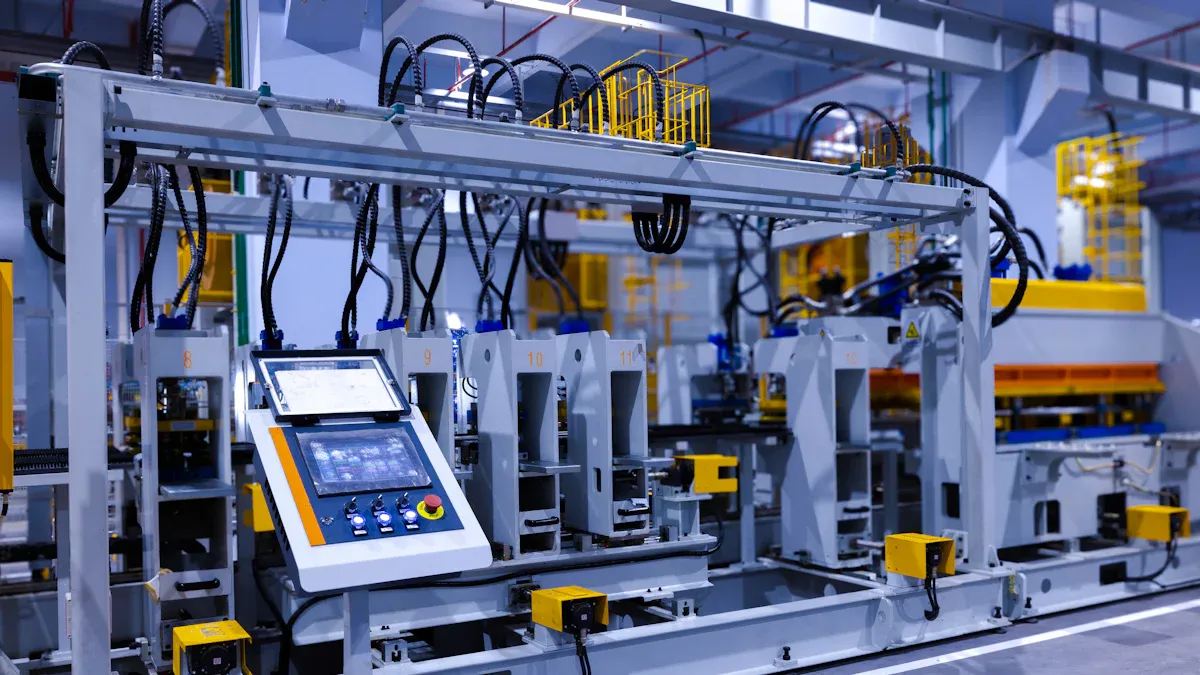
Evaluating force requirements is essential for selecting the right planetary reducer in injection molding applications. The force needed to inject materials into molds varies significantly based on the type of material and the size of the parts being produced. Manufacturers must consider these factors to ensure optimal performance.
To calculate the required force, manufacturers can follow these steps:
- Calculate the square inch area of the cavity: Multiply the length by the width of the mold cavity.
- Determine the tonnage factor: Multiply the surface area by a tonnage factor provided by the material supplier. This factor typically ranges from 2 to 8 tons per square inch.
The following table illustrates the tonnage requirements for various material types:
| Material Type | Tonnage Required (tons per square inch) |
|---|---|
| Engineering Resins | 5–8 |
| Commodity Resins | 2–4 |
| Glass-Filled Materials | +1–2 |
For instance, if a manufacturer uses an engineering resin with a mold cavity measuring 10 inches by 5 inches, the calculation would be as follows:
- Surface Area: 10 in × 5 in = 50 in²
- Tonnage Requirement: 50 in² × 6 tons/in² (average for engineering resins) = 300 tons
This calculation highlights the importance of understanding force requirements when selecting a planetary reducer. An injection molding machine gearbox supplier can provide valuable insights into the appropriate reducer specifications based on these calculations.
Precision Requirements
Precision is a critical factor in selecting planetary reducers for injection molding applications. It directly impacts tolerances and dimensional control during the manufacturing process. Higher precision levels lead to improved performance and fewer defects in injection molded products. This ensures that the final output meets the required specifications and quality standards.
Backlash Considerations
Backlash refers to the play or clearance between the gears in a reducer. Minimizing backlash is essential for maintaining precision. The following table outlines typical backlash ranges for different precision levels:
| Backlash Type | Range (arcmin) |
|---|---|
| Micro precision backlash | 1 – 3 |
| Precision backlash | 3 – 5 |
| Low backlash class | 2 – 5 |
Manufacturers should aim for lower backlash values to enhance the accuracy of the injection molding process. This reduction in backlash contributes to consistent product quality and reduces the likelihood of defects.
Impact on Product Quality
The precision of planetary reducers significantly influences the overall quality of injection molded products. High-precision reducers ensure that the injection process maintains tight tolerances. This precision leads to better dimensional accuracy and surface finish, which are crucial for high-performance applications.
Choosing an Injection Molding Machine Gearbox Supplier
Selecting the right injection molding machine gearbox supplier is vital for ensuring optimal performance and reliability. Manufacturers should evaluate potential suppliers based on several key criteria. These criteria help assess the supplier’s capability to meet specific operational needs.
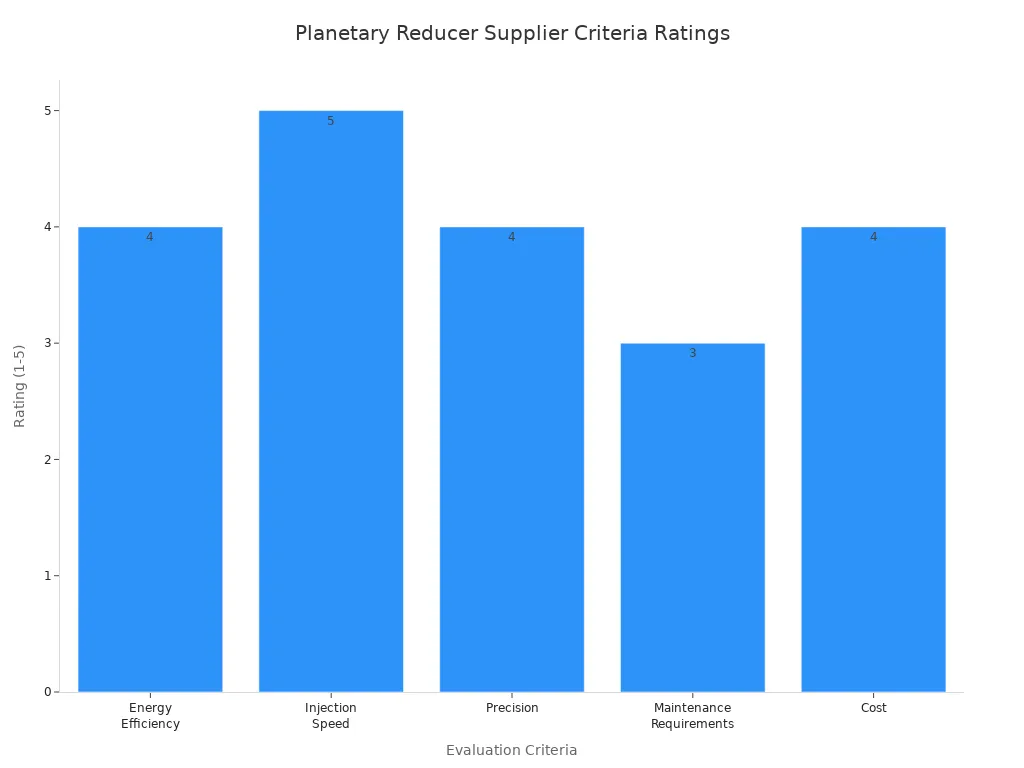
The following table outlines essential criteria for evaluating planetary reducer suppliers:
| Criteria | Description | Importance Level | Rating (1-5) |
|---|---|---|---|
| Energy Efficiency | Evaluate the machine’s energy consumption and efficiency ratings. | High | 4 |
| Injection Speed | Consider the speed of injection and its impact on production time. | High | 5 |
| Precision | Assess the machine’s precision in producing detailed parts. | Medium | 4 |
| Maintenance Requirements | Analyze the ease of maintenance and service support. | Medium | 3 |
| Cost | Evaluate the total cost of ownership including operation and maintenance. | High | 4 |
In addition to these criteria, manufacturers should ensure that suppliers meet relevant certifications and quality standards. Key certifications include:
- ISO 9001
- IATF 16949
- ISO 13485
These certifications indicate a commitment to quality management and operational excellence. A reputable injection molding machine gearbox supplier will possess these certifications, ensuring that their products meet industry standards.
By carefully evaluating suppliers based on these criteria and certifications, manufacturers can make informed decisions. This diligence leads to enhanced performance and reliability in their injection molding processes.
Selecting the right planetary reducer significantly impacts injection molding efficiency and product quality. Proper selection ensures that machines operate within optimal torque, speed, and force parameters. This optimization leads to enhanced performance, shorter cycle times, and fewer product defects. Manufacturers should prioritize thorough calculations and evaluations when choosing an injection molding machine gearbox supplier.
FAQ
What is a planetary reducer?
A planetary reducer is a gear system that reduces speed while increasing torque, commonly used in injection molding machines for efficient operation.
How do I determine the right reduction ratio?
To determine the right reduction ratio, consider the input and output speeds required for your specific injection molding application.
Why is precision important in planetary reducers?
Precision ensures accurate control during the injection process, leading to better product quality and reduced defects in molded parts.