
Sourcing high-Quality Servo Motors from China is complex. Buyers mitigate risks, ensuring product excellence in international procurement. The global servo motor market reachedUSD 13.52 billion in 2024. This guide offers a comprehensive checklist for successful procurement, covering an Ac Servo Motor supplier for automation, aprecision servo motor manufacturer China, and a servo motor and drive set OEM.
Key Takeaways
- Research Chinese Servo Motor suppliers carefully. Check their certifications and how long they have been in business. This helps you findreliable partners.
- Look closely at the motor’s technical details. Make sure it fits your needs for speed and precision. Also, check that the supplier has good quality control and tests their products well.
- Think about more than just the price. Consider shipping costs, warranties, and after-sales support. Good support helps you in the long run.
Understanding China’s Servo Motor Manufacturing Landscape
Key Manufacturing Hubs and Specializations
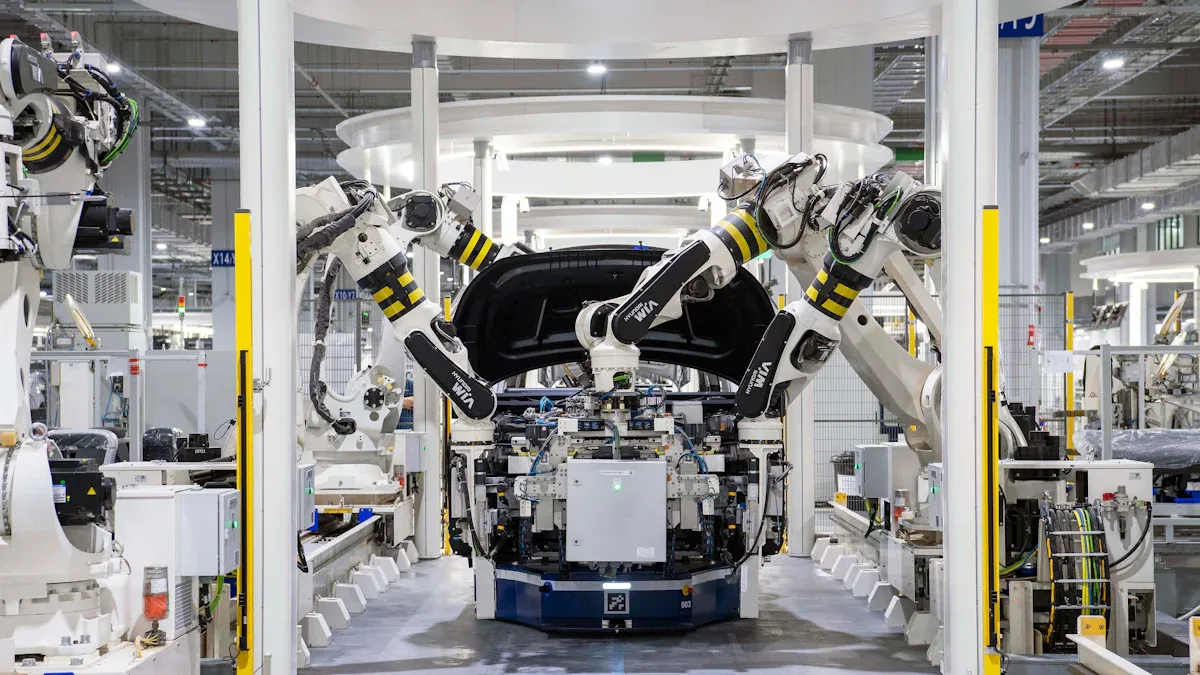
China has several important regions for Servo Motor production. These areas specialize in different aspects of manufacturing. Shenzhen, Guangdong, stands out as a major hub. Many prominent manufacturers operate there. These includeLeadshine Technology Co., Ltd., Inovance, Kinco, and INVT. Leadshine, for example, has its headquarters in Shenzhen. It also runs multiple manufacturing bases and research centers across the country. Other significant locations include Yueqing, Zhejiang, home to Radin. Nanjing, Jiangsu, hosts Estun. Hangzhou City, Zhejiang Province, also features a notable manufacturing presence for Servo Motors.
Current Market Trends and Technological Advancements
The Chinese Servo Motor market shows strong growth. Experts project an8% compound annual growth rate (CAGR) from 2023 to 2028. This could push the market size to USD 1.6 billion by 2028 in a base-case scenario. This growth comes from several factors. Advancements in automation, robotics, and industrial machinery drive demand. Rising consumer demand and supportive regulations also play a role. The market needs high-performance, compact, and energy-efficient servo solutions.
Technological advancements are also shaping the industry. Enhanced control algorithms and integrated communication protocolsimprove efficiency. Artificial intelligence (AI) and machine learning enable real-time performance adjustments. They also optimize energy use. Miniaturization of components creates smaller, lighter Servo Systems. Integration with IoT frameworks allows for data-driven decisions and predictive maintenance. New communication standards, like EtherCAT and CANopen, simplify system integration.Brushless servo technologyoffers better efficiency and reliability. Advanced Control Systems, such as fuzzy and adaptive PID controllers, further enhance performance.
Essential Criteria for Vetting a High-Quality AC Servo Motor Supplier for Automation
Selecting the right AC servo motor supplier for automation requires careful evaluation. Buyers must assess several critical factors. These factors ensure product quality, reliability, and long-term partnership success.
Supplier Due Diligence and Operational Longevity
Thorough due diligence is essential when choosing an AC servo motor supplier for automation. Buyers must analyze vendor financial stability. This includes reviewing third-party testing results. These results provide objective data. Benchmarking against industry standards helps assess performance. Buyers also validate growth forecasts with historical data and market reports. This ensures realistic expectations. Engaging with independent consultants or industry analysts can refine decision-making. This data-driven approach helps evaluate vendors effectively.
Buyers must also verify a Chinese servo motor supplier’s background. They request and examine copies of certifications, such as ISO 9001, CE, and RoHS. They also review test reports, including IP ratings and vibration resistance. Factory audit summaries provide further insight. Buyers verify certifications through official databases like CNAS. They conduct testing of delivered units under load conditions. This confirms torque consistency, thermal performance, and encoder accuracy. Contacting existing international customers gathers feedback on post-sale support and real-world product reliability. Buyers review audit reports for evidence of automated winding equipment and climate-controlled assembly lines. They also look for rigorous testing protocols. Assessing operational metrics is crucial. This includes evaluating on-time delivery rates, aiming for 95% or higher. Customer reorder rates above 30% indicate high satisfaction. Response times within three hours show commitment. Suppliers with 10 or more years in operation often have refined processes. Neglecting supply chain resilience poses a risk. Therefore, diversifying suppliers and planning for contingencies are essential for operational longevity.
Quality Certifications and International Compliance Standards
Quality certifications demonstrate a supplier’s commitment to international standards. Essential certifications for AC servo motor manufacturers include CE, RoHS, ISO, and Reach. These certifications confirm products meet specific safety, environmental, and quality requirements.
Buyers must verify the authenticity and validity of a Chinese servo motor supplier’s certifications. They scrutinize all technical documents. This includes voltage specifications, which often require dual 50/60Hz certifications like CE or UL. Buyers also check language accuracy in user manuals. They may commission native-speaking engineers for audits. Buyers cross-reference supplier documentation, including certificates of analysis and material certifications, against actual components. This verifies the Bill of Materials (BOM) authenticity. They validate traceability through unique serial numbers or batch codes. Buyers verify that key components, like servo motors, come from well-known, reliable brands. They request motor nameplate photos showing part numbers from brands like Siemens or Baldor. To verify compliance and authenticity, buyers can commission third-party audits, such as SGS or TÜV. These audits specifically verify conditions and validate efficiency through standardized testing. Buyers request comprehensive technical datasheets, including test curves. They verify certification numbers directly with the issuing bodies. Testing samples under actual operating conditions confirms performance. For critical applications, buyers consider third-party lab testing or factory audits. They request proof of certifications and check documented on-time delivery rates and client references. Buyers ensure compliance with local electrical codes, such as UL, CE, or CCC. They validate Electromagnetic Compatibility (EMC) if the motor operates near sensitive equipment. For exports to Europe, buyers confirm RoHS or REACH status.
Technical Specifications and Performance Verification
Evaluating technical specifications is paramount for selecting an AC servo motor for automation applications. Buyers consider desired precision and speed. For high-speed or precise positioning, motors with high-resolution encoders and capable controllers are necessary. System compatibility is vital. The motor must be compatible with the controller, communication protocols like EtherCAT or PROFINET, and the power supply for seamless integration. The operating environment dictates motor suitability. The motor must withstand conditions such as dust, moisture, vibration, or extreme temperatures. This requires an appropriate protection rating, like an IP rating. A cost-benefit analysis evaluates the long-term return on investment. Robust and precise motors, while initially more expensive, offer increased productivity and energy savings. The motor’s controller must effectively communicate with the main controller or PLC using appropriate protocols.
Key performance metrics include torque, speed, and efficiency. Torque refers to the force exerted. Speed indicates how quickly the motor reaches its desired position. Efficiency reduces operational costs and energy consumption. Buyers consider continuous torque, peak torque, and speed range to meet operational demands. Accuracy and resolution involve selecting appropriate encoders, either incremental or absolute. They consider resolution for fine control and repeatability for consistent positioning. Motor size and power match load inertia. This ensures adequate power rating for continuous and peak demands. Buyers select a form factor that fits the physical space. Compatibility with the servo drive and controller is crucial. This involves verifying voltage and current ratings, communication protocols like EtherCAT, CANopen, or Modbus, and feedback device compatibility. Environmental and operating conditions include temperature range, humidity and dust protection (IP-rated enclosures), vibration and shock resistance, and noise levels. Efficiency and energy savings come from high-efficiency windings, regenerative braking capabilities, and low standby power consumption. Maintenance and serviceability consider the availability of spare parts, diagnostic tools, and predictive maintenance features. Finally, a cost-performance balance weighs performance needs against budget. It evaluates lifecycle cost and considers vendor support and warranty.
Buyers verify an AC servo motor’s performance against its stated specifications through various methods. Visual inspection checks for wear, damaged wires, loose connections, or burnt components. An insulation resistance test uses a megohmmeter to measure resistance between windings and ground. Low readings indicate potential insulation failure. A winding resistance test uses an ohmmeter to measure winding resistance. Consistent readings across windings indicate a healthy motor. A load test operates the motor under its intended load. It measures current, voltage, and speed against specifications. Vibration analysis measures vibration levels to detect mechanical imbalances, misalignment, or bearing issues. Thermographic analysis uses infrared cameras to detect overheating. This indicates issues like overloading or electrical faults. Motor Circuit Analysis (MCA) evaluates electrical health by measuring impedance, inductance, and capacitance to identify circuit faults. Advanced analysis techniques include analyzing current waveform for power consumption and efficiency. Buyers measure back EMF to assess mechanical condition. They verify commutation signals for brushless DC motors. They monitor encoder or resolver signals for accuracy. They examine PWM signals for issues with the motor driver. Fast Fourier Transform (FFT) identifies noise and vibration. XY mode plotting provides insights into efficiency and power factor.
Evaluating Supplier Capabilities and Quality Control
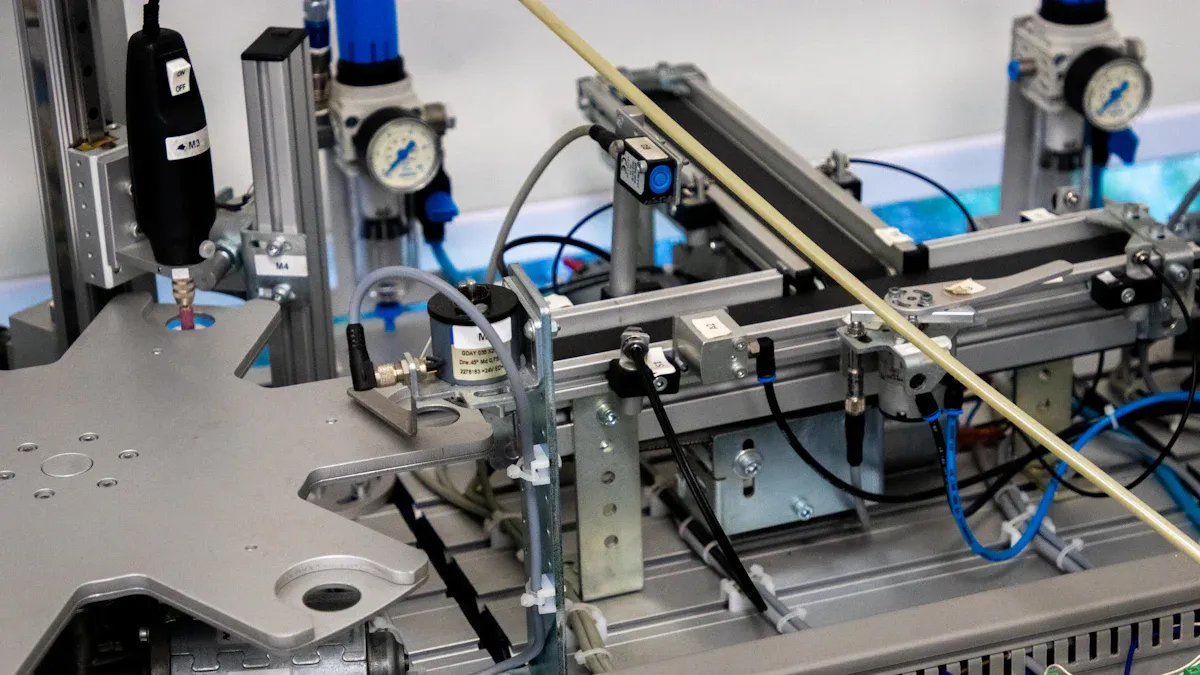
Buyers must thoroughly assess a supplier’s capabilities and quality control measures. This ensures they receive reliable and high-performing servo motors. A comprehensive evaluation covers production capacity, quality processes, and post-purchase support.
Production Capacity and Lead Time Management
A supplier’s production capacity directly impacts delivery schedules. Buyers need to understand the manufacturer’s ability to meet demand. They should inquire about daily or monthly output volumes. This helps gauge if the supplier can handle order sizes. Buyers also assess the supplier’s flexibility for scaling production up or down.
Lead time management is equally critical. Extended lead times from Chinese servo motor suppliers can pose significant risks. Buyers can mitigate these risks through several strategies. One approach involves utilizing tested, refurbished, or compatible replacement parts. This avoids delays and inflated costs. Such parts often come with warranties, eliminate tariff fees, and prevent overseas shipping delays. They also offer lower upfront costs compared to new imports. Another strategy is investing in localized manufacturing and supply chain diversification. This reduces vulnerability and improves cost competitiveness. Implementing agile pricing and procurement strategies helps navigate input cost volatility. Supply chain disruptions have led to increased lead times (20-30%) and price swings (up to 15% annually. Therefore, buyers should adopt proactive risk mitigation. This includes diversified sourcing, strategic inventory management, and continuous technology monitoring. Diversifying suppliers reduces reliance on a single source. Considering nearshoring alternatives shortens supply chains and mitigates geopolitical risks. Prioritizing suppliers with localized manufacturing capabilities also reduces lead times. Buyers should select suppliers with component inventories aligned to lead-time buffers. This ensures part availability. Choosing suppliers with established quality controls minimizes disruption risks.
Robust Quality Control Processes and Testing
High-quality servo motors result from stringent quality control. Buyers must investigate a supplier’s quality management system. This includes understanding their inspection points throughout the manufacturing process. A robust system typically involves checks from raw material intake to final product assembly.
Standard testing procedures ensure the reliability and performance of servo motors before shipment. These tests detect potential issues early.
- No-Load Start Characteristic Test: This test monitors peak start current and speed rise time. It detects early issues like bearing jams or winding faults.
- Rated Speed Stability Test: This assesses speed control accuracy. It measures speed variability at the rated speed.
- Positioning Accuracy & Repeatability Test: This test is critical for machining quality. It evaluates the motor’s ability to reach and consistently return to specific positions.
- Torque-Speed Characteristic Test: This verifies the motor’s adaptability to various loads. It analyzes its torque and power performance across different speeds.
- Temperature Rise & Thermal Test: This evaluates long-term reliability. It monitors winding, bearing, and drive temperatures under rated load conditions.
Before conducting these tests, essential preparations are necessary. Tools include a multimeter or power meter, a tachometer or encoder tester, a vibration meter or sound level meter, and an infrared thermometer. The testing environment requires a stable power supply (voltage fluctuation ≤±5%). It also needs rigid mechanical installation (coaxiality error <0.05mm) and a compatible control platform. Examples include Mitsubishi MR Configurator2 or Siemens SINA_POS.
After-Sales Support, Warranty, and Technical Assistance
Reliable after-sales support is crucial for long-term operational success. Buyers should expect comprehensive technical assistance from their AC servo motor supplier for automation. This includes remote diagnostics via phone, email, or online portals. On-site support for complex issues is also important, with technicians equipped for repairs and maintenance. Manufacturers often provide a range of training services. These range from introductory courses for new users to advanced programs on system integration and troubleshooting. On-the-job training at the customer’s site is also common.
Spare parts availability is another key aspect. Manufacturers typically maintain a large inventory of high-quality spare parts. This ensures quick supply with fast shipping options, including same-day or next-day delivery for urgent needs. Product upgrade services are also available. These include regular software updates to improve performance and functionality. Hardware upgrades, such as power modules or control boards, help meet evolving requirements.
Warranty and maintenance contracts provide essential protection. A comprehensive warranty protects against manufacturing defects. Typical warranty periods for integrated servo motors generally range from one to three years. Some high-end models may offer extended warranties of five years or more. These warranties commonly cover defects in materials and workmanship. Manufacturers commit to repairing or replacing faulty motors within the specified period, including parts, labor, and shipping costs. For example, Shenzhen ECON Technology Co., Ltd. provides a 12-month warranty from the shipment date. This covers defects in materials and workmanship. However, this warranty does not cover damage from improper handling, inadequate wiring, unauthorized modifications, misuse, or operation outside product specifications. Customers usually need a Returned Material Authorization (RMA) number for warranty service. They are responsible for prepaying shipping costs for returns. The manufacturer then covers the return shipping to the customer. Additionally, flexible maintenance contracts are offered for regular inspections, cleaning, and calibration, with customizable service levels. Manufacturers also actively collect customer feedback through surveys and reviews. This identifies areas for improvement in products and services, leading to adjustments in support processes and product development.
Strategic Sourcing: Cost Optimization and Risk Mitigation
Effective Price Negotiation and Total Cost of Ownership
Buyers must look beyond the initial purchase price when sourcing servo motors. Effective price negotiation involves understanding the total cost of ownership (TCO). This includes shipping, customs duties, maintenance, and potential downtime. Negotiators should research market prices and supplier costs. They can leverage volume discounts for larger orders. A long-term partnership often leads to better pricing. Focusing on TCO helps buyers make more informed financial decisions.
Contractual Agreements and Intellectual Property Protection
Strong contractual agreements protect buyer interests. Contracts should detail clear warranty terms and after-sales service. They specify warranty duration, covered defects, and the claims process. Buyers inquire about post-purchase technical support and spare parts availability. Including dispute resolution mechanisms is crucial. These clauses outline mediation, arbitration (e.g., through CIETAC), or litigation. This provides a framework for addressing potential issues. If custom designs are involved, robust intellectual property (IP) protection clauses are essential. Non-Disclosure Agreements (NDAs) explicitly state that custom designs and tooling remain the buyer’s exclusive property.
Payment terms and security also require careful outlining. Common terms include a down payment (e.g., 30% T/T) with the balance paid upon completion or against shipping documents. Letters of Credit (L/C) suit larger orders, offering security. Buyers must understand Incoterms to clarify responsibilities for international shipping. Key terms include FOB (Free On Board), CIF (Cost, Insurance, and Freight), and EXW (Ex Works). The purchase contract itself must be a legally binding agreement. It specifies rights and obligations, covering product specifications, price, delivery, quality assurance, and liability for breach.
Addressing Common Sourcing Pitfalls and Communication Barriers
Sourcing from China presents common pitfalls. Communication difficulties often arise from language barriers and cultural differences. These can lead to misunderstandings, delivery delays, and production issues. A lack of proper quality control inspections poses a risk of receiving products with quality issues. Buyers must carefully inspect samples for defects, damages, or poor-quality components before placing bulk orders. Failure to do so can lead to costly commitments for substandard products.
Supply chain vulnerabilities also exist. Servo motors heavily rely on rare earth magnets (neodymium and dysprosium). China controls 85–90% of the global supply. This creates vulnerability to supply chain disruptions and price volatility. Past export restrictions from China have caused price spikes. This highlights the risks of relying on a single supply region. U.S.-China tariffs (2018–2019) increased servo motor component costs by 10–25%. Buyers must consider these factors for effective risk mitigation.
Successful servo motor sourcing from China requires diligence. Buyers build strong, long-term partnerships with Chinese suppliers. They make informed, strategic procurement decisions. This guide helps buyers choose a reliable AC servo motor supplier for automation. It ensures product excellence and mitigates risks.
FAQ
How do buyers verify supplier certifications?
Buyers verify certifications through official databases like CNAS. They also commission third-party audits, such as SGS or TÜV. Testing samples under actual operating conditions confirms performance.
What are the main risks when sourcing from China?
Main risks include communication barriers and quality control issues. Supply chain vulnerabilities, like reliance on rare earth magnets, also pose risks. Tariffs can increase costs.
Why is after-sales support important?
After-sales support ensures long-term operational success. It provides technical assistance, spare parts, and warranty protection. This minimizes downtime and operational costs. 🛠️